Vacancies
PhD Project: Understanding and Targeting Disease Causing DNA interactions
Our DNA carries the blueprint of life, but the same base-pairing that encodes genetic information can also create harmful DNA interactions within cells. When certain nucleotide sequences are repeated, they can fold into unusual DNA secondary structures, such as hairpins, that slow or stall essential processes like DNA replication. These disruptions contribute to diseases including Huntington’s disease, which involves (CAG)ₙ repeats, and some cancers, such as renal cell carcinoma with (GAAA)ₙ repeats.
Understanding how these repeat sequences alter DNA structure and affect DNA-binding proteins is key to developing targeted therapies. This project uses state-of-the-art single-molecule techniques, including optical and magnetic tweezers, to manipulate and image these toxic DNA sequences, gaining insights into how they form and interact with potential therapeutic molecules.
Deadline: 4th of December, 2025
PhD Project: Decoding Condensin Regulation: Single-Molecule Tools to Target IDR Interactions
This project aims to unravel how intrinsically disordered regions (IDRs) regulate the activity of human condensin complexes-key molecular machines responsible for organising and segregating chromosomes during cell division.
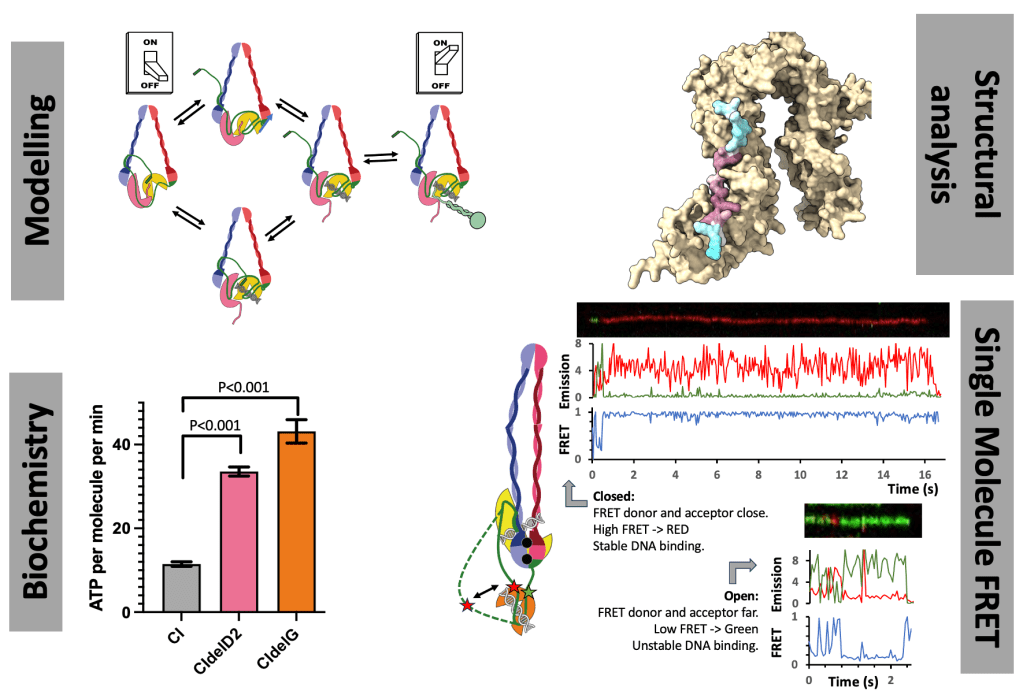
Understanding IDR-mediated interactions is a major challenge due to their dynamic, low-affinity nature and difficulties in protein purification. This project overcomes these hurdles using cutting-edge techniques: Al based computational protein modelling with AlphaFold and BindCraft, and high- throughput single-molecule Förster Resonance Energy Transfer (FRET) developed in partnership with biotech company Exciting Instruments. FRET enables precise detection of fluorescently labelled protein-IDR interactions using minimal material, making it ideal for screening for peptide based inhibitors.
You will model and design FRET-compatible labelling sites on condensin complexes, express and purify target proteins, and screen peptide libraries for specific IDR interaction inhibitors. Promising hits will be validated through in vitro and cell-based assays, providing not only mechanistic insight into condensin regulation but also identifying novel peptide-based inhibitors with therapeutic potential.
This project offers comprehensive training in structural prediction, fluorescence-based biophysics, biochemistry and cell-based assays. It provides the opportunity to work at the interface of academia and industry and contribute to the development of transformative technologies with applications across structural biology and drug discovery.
Deadline: 7th January, 2026
Post-doc positions opening soon! Contact me to register interest.
 Cutts Lab